

A bespoke carpenter can build fitted storage, cupboards, staircases, gates, timber features, roof structures, oak framing, studwork, floor structures and made-to-measure joinery designed around your home. Unlike off-the-shelf furniture or standard building products, bespoke carpentry is made to fit the space, style and practical needs of the property.
At FraserWood Construction Ltd, we provide bespoke carpentry services across Sussex, covering everything from structural timber construction to detailed internal finishes. Whether you need a practical storage solution, a timber feature, a new staircase, an external gate, a roof structure or custom joinery for a renovation, bespoke carpentry gives you a result made for the property rather than forced into it.
What does “bespoke carpentry” mean?
Bespoke carpentry means timber work that is designed and built for a specific space or project.
That might be something small and practical, such as a fitted cupboard under the stairs. It might be something more visible, such as a custom gate, staircase, window, shelving unit or garden building. It can also be structural work, such as roof timbers, floor structures, studwork, timber framing or oak framing.
The key difference is fit.
A standard product is made to a fixed size. Your home then has to work around it. Bespoke carpentry works the other way round. The work is measured, designed and built around the property, the use of the space and the finish you want.
That can be especially useful in Sussex homes, where properties often have uneven walls, older layouts, awkward corners, period details, extensions, loft spaces or rooms that do not suit standard furniture sizes.
What can a bespoke carpenter build inside your home?
A bespoke carpenter can help with many of the internal features that make a home more practical, better finished and easier to live in.
Some carpentry is decorative. Some is practical. Some is structural. In many projects, it is all three.
Fitted cupboards and storage
One of the most common reasons people look for bespoke carpentry is storage.
Most homes have spaces that are difficult to use properly. Under the stairs. Alcoves. Sloping ceilings. Narrow hallways. Utility rooms. Loft rooms. Corners where standard furniture never quite fits.
A bespoke carpenter can turn those spaces into useful storage, such as:
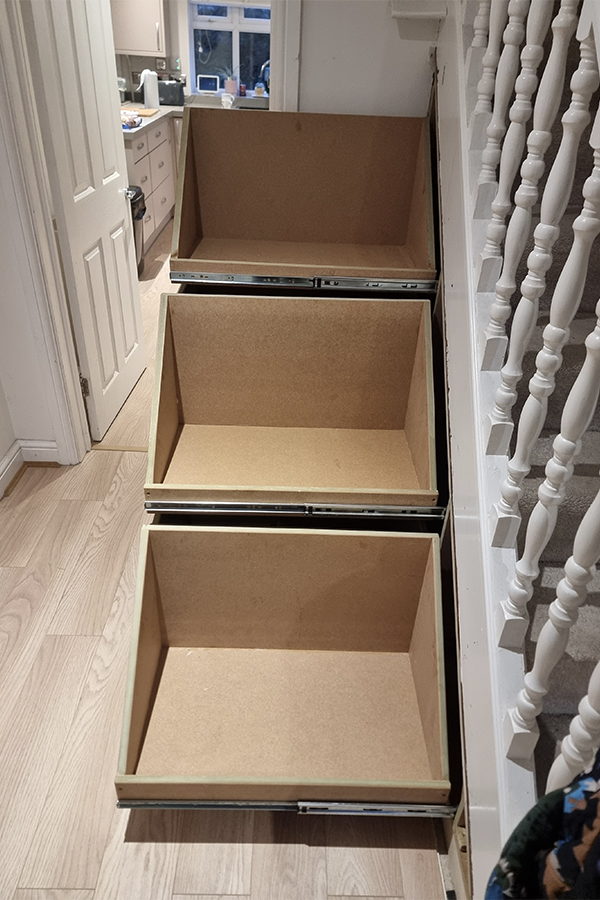
- under-stair drawers;
- fitted cupboards;
- alcove units;
- shelving;
- wardrobe storage;
- utility cupboards;
- boot room storage;
- media units;
- office storage;
- made-to-measure drawers.
The advantage is that the storage can be built around the exact shape of the space. It can also be designed around what you actually need to store.
For example, an under-stair storage unit might need deep drawers for shoes, coats, tools, bags or household items. A living room unit might need a mix of shelves, cupboards and cable management. A home office might need built-in desk space, shelving and hidden storage.
Off-the-shelf furniture can work in simple rooms. Bespoke storage works best when the space is awkward, the finish matters, or you want the joinery to look like part of the home rather than an item placed inside it.
You can see an example under stair storage case study here.
Shelving, cupboards and display joinery
Bespoke carpentry is also useful when storage needs to look good, not just hold things.
A carpenter can build shelving, cupboards and display joinery for:
- living rooms;
- home offices;
- studios;
- bedrooms;
- kitchens;
- playrooms;
- commercial spaces;
- garden rooms;
- workshops.
This kind of work is often about balance. It needs to be strong enough for daily use, accurate enough to fit neatly, and finished well enough to suit the room.
For some homes, that might mean simple painted cupboards. For others, it might mean exposed timber, oak details, open shelving, acoustic panelling, reclaimed timber or a mix of timber and metal.
The best result depends on how the room is used. A studio or workspace may need robust shelving and practical surfaces. A sitting room may need the joinery to feel calm and part of the architecture. A bedroom may need discreet storage that does not dominate the room.
You can see our bespoke studio joinery case study for more information.
Staircases, studwork and internal finishes
Carpentry is not only about furniture and storage. A lot of important carpentry work happens as part of a renovation, extension or building project.
This can include:
- staircases;
- stud walls;
- timber partitions;
- floor structures;
- door linings;
- skirting boards;
- architraves;
- internal doors;
- second fix carpentry;
- finishing details.
These parts of a project may not always be the first thing people notice, but they have a big effect on how finished the home feels.
Poorly fitted skirting, uneven door linings, weak studwork or badly planned flooring can make a project feel unfinished. Good carpentry gives the rest of the work a clean, accurate base.
For renovations and extensions, this matters because new work often has to meet old work. A carpenter may need to deal with walls that are not perfectly straight, floors that are not perfectly level, or older details that need to be matched rather than replaced with something generic.
What can a carpenter build outside your home?
Bespoke carpentry can also improve the outside of a property. This may include gates, fencing, windows, timber doors, garden structures, cladding, sheds, workshops and external joinery.
External work needs extra care because it has to deal with weather, movement, wear and long-term exposure.
Bespoke gates and fencing
A bespoke gate can do more than close an opening. It can improve security, privacy and kerb appeal.
A carpenter can build:
- entrance gates;
- side gates;
- garden gates;
- timber fencing;
- bin store screens;
- driveway gates;
- pedestrian gates;
- matching timber features.
The benefit of bespoke work is that the gate can be made to fit the opening properly. It can also be built to suit the style of the property, whether that means a simple practical gate, a more traditional timber design, or something built to match existing fencing or exterior joinery.
Good external carpentry also considers the details that affect long-term use: hinges, posts, fixings, timber choice, water run-off, ground clearance and how the timber will weather over time.
You can see our bespoke external gates case study for some ideas.
Timber windows, doors and exterior joinery
Some homes need timber windows, doors or exterior joinery that cannot be replaced with standard products without losing character.
This is often the case with older homes, period properties, cottages, outbuildings or homes where a modern replacement would look out of place.
A bespoke carpenter can help with:
- timber windows;
- timber doors;
- replacement joinery;
- exterior frames;
- repairs to existing timber;
- matching existing profiles;
- hardwood joinery;
- Accoya or other suitable external timbers.
The right material matters. External timber has to handle moisture, movement and temperature changes. A good carpenter will consider not only how the piece looks when installed, but how it will perform in the years after installation.
See our bespoke timber window case study for more information.
Garden sheds, workshops and small outbuildings
Bespoke carpentry can also be used for garden buildings and outdoor structures.
This can include:
- garden sheds;
- workshops;
- timber studios;
- storage buildings;
- cladding repairs;
- new doors and windows;
- timber frame repairs;
- matching an existing garden building.
In some cases, the best option is not to replace an entire structure. If the main frame is sound, a carpenter may be able to repair rotten sections, replace cladding, fit new doors or windows, and improve the building without starting again from scratch.
That can be particularly useful where a shed, studio or garden structure already fits the space but needs careful repair or improvement.
You can see some garden shed repairs and timber upgrades on our project page.
Can bespoke carpentry be structural?
Yes. Bespoke carpentry can be structural as well as decorative.
This is an important point because many people hear “carpentry” and think only of cupboards, shelves or finishing work. In reality, carpentry is often central to the structure of a building.
Structural carpentry can include:
- roof structures;
- cut roofs;
- timber frames;
- oak framing;
- floor structures;
- studwork;
- structural timber alterations;
- timber elements within extensions or renovations.
This kind of work needs careful planning because it affects how the building performs. Depending on the project, it may also need input from an architect, structural engineer, building control officer or other professional.
Roof structures and cut roofs
A cut roof is a roof structure built on site from individual timbers rather than delivered as pre-made trusses.
This can be useful when a roof has a more complex shape, when the design is bespoke, or when the building does not suit a standard truss solution.
Cut roofs are often needed in extensions, renovations, older buildings and more detailed projects where the roof has to work around a specific layout.
Because roof structures are part of the building’s structure, they need to be designed and built correctly. A carpenter’s work may need to follow structural drawings, engineering details and building control requirements.
Oak framing and timber structures
Oak framing and structural timber work can add both strength and character.
A carpenter may build or install timber features such as:
- oak framed garages;
- exposed beams;
- timber frames;
- porches;
- roof features;
- structural timber elements;
- decorative but substantial timber details.
Oak and other hardwoods can create a strong visual feature, especially in rural properties, traditional homes and buildings where timber is part of the design.
This kind of work is different from standard internal carpentry. It often involves heavier sections of timber, careful setting out, accurate joints and an understanding of how the structure will sit within the wider project.
You can see our oak framing project for inspiration.
When is bespoke carpentry better than buying something off the shelf?
Bespoke carpentry is not always needed. For some simple jobs, a standard product may be enough.
But bespoke work is usually better when the space, design or finish needs something more exact.
| Situation | Off-the-shelf option | Bespoke carpentry option |
| Awkward space | May leave gaps or waste space | Built to fit the exact space |
| Period property | May look out of place | Can be designed to suit the character of the home |
| Storage problem | Limited to standard sizes | Designed around what you need to store |
| Long-term finish | Quality can vary | Materials and finish can be chosen for the job |
| Structural work | Usually not suitable | Built to suit the project requirements |
| Outdoor timber | May not fit the opening or weather well | Designed around the site, use and exposure |
| Renovation work | May not match existing details | Can be made to blend old and new work |
Bespoke carpentry is especially useful when you want the result to look as though it belongs to the property.
That might mean matching an existing timber profile, making better use of a difficult space, building something stronger than a standard product, or creating a finish that suits the rest of the room.
What types of homes benefit most from bespoke carpentry?
Many different homes can benefit from bespoke carpentry, but it is especially useful in properties where standard sizes do not work well.
This may include:
- older Sussex homes;
- cottages;
- period properties;
- converted buildings;
- homes with sloping ceilings;
- homes with alcoves or chimney breasts;
- extensions;
- loft conversions;
- renovations;
- homes with awkward storage needs;
- commercial spaces needing custom joinery.
In older homes, bespoke carpentry can help preserve character while improving function. In newer homes, it can add quality, storage and individuality. In extensions and renovations, it can help the new work feel properly connected to the existing building.
For commercial spaces, bespoke carpentry can be used for counters, storage, shelving, display units, workspaces, seating, screens and practical joinery that supports how the business operates.
How does the bespoke carpentry process usually work?
Every project is different, but most bespoke carpentry work follows a simple process.
1. Initial enquiry
The first step is usually a conversation about what you want to achieve.
For smaller projects, photos and a short description may be enough to start. For larger projects, drawings, plans or measurements may be useful.
Helpful information includes:
- the address or area of the property;
- what you want built or repaired;
- photos of the space;
- rough measurements if available;
- any design ideas;
- whether the work is part of a larger project;
- your preferred timescale.
2. Site visit or project review
For most bespoke work, the space needs to be reviewed properly.
This allows the carpenter to look at:
- measurements;
- access;
- wall and floor levels;
- existing timber;
- surrounding finishes;
- structural requirements;
- services such as plumbing or electrics;
- how the finished item will be used.
This stage is important because bespoke carpentry depends on the details. A cupboard, gate, staircase or timber frame is only successful if it fits the real conditions on site.
3. Design and specification
Once the space and requirement are understood, the next step is to agree what will be built.
This may include:
- size;
- layout;
- materials;
- finish;
- timber type;
- hardware;
- paint or stain;
- storage layout;
- access requirements;
- structural details where relevant.
For simple projects, this may be straightforward. For more complex work, it may involve drawings, design decisions or coordination with other trades.
4. Build and installation
Some carpentry can be made partly off site and installed later. Other work is built directly on site, especially structural work, roof timbers, studwork, floors and work that forms part of a larger building project.
Installation needs to be clean, accurate and practical. A good result should not only look right on day one. It should work properly with everyday use.
5. Finishing details
The final details often make the biggest visible difference.
This can include:
- neat joints;
- consistent gaps;
- smooth operation of drawers and doors;
- careful trims;
- matching existing finishes;
- sanding;
- painting or oiling;
- final adjustments.
Good finishing is where bespoke carpentry earns its place. It should feel deliberate, not improvised.
How much does bespoke carpentry cost?
The cost of bespoke carpentry depends on the size, materials, complexity and finish of the work.
A simple fitted cupboard will be priced very differently from an oak frame, staircase, roof structure or full package of first and second fix carpentry.
The main things that affect cost include:
- the size of the job;
- the type of timber or sheet material;
- the complexity of the design;
- whether the work is structural;
- how much finishing is needed;
- site access;
- whether other trades are involved;
- whether it is part of a larger building project;
- whether drawings or engineering details are needed;
- the choice of ironmongery, hinges, handles and fittings.
For example, under-stair storage might depend on the number of drawers, the internal layout and the finish. A bespoke gate might depend on size, timber choice, posts, fixings and exposure to weather. A roof structure will depend on drawings, structural requirements and the scale of the build.
The most accurate way to understand the cost is to share photos, drawings or a clear description of the work and request a quote.
Why choose a local Sussex carpenter?
Choosing a local carpenter can make the project easier to manage.
A local Sussex carpenter is more likely to understand local property styles, common renovation issues and the practicalities of working across towns, villages and rural properties in the area.
There are also practical benefits:
- easier site visits;
- clearer communication;
- local project examples;
- local supplier knowledge;
- better understanding of Sussex property types;
- accountability after the work is complete.
At FraserWood Construction Ltd, we provide bespoke carpentry services across Sussex for residential and commercial clients. Because we also work across wider construction projects, we can support carpentry as a standalone service or as part of a larger renovation, extension, garden room, roof or building project.
What can FraserWood build for your home?
FraserWood Construction Ltd provides bespoke carpentry services across Sussex, from structural timber work and roof structures to fitted storage, gates, staircases, internal finishes and made-to-measure joinery.
Our carpentry services include:
- structural carpentry;
- timber framing;
- roof structures;
- cut roofs;
- oak framing;
- hardwood carpentry;
- bespoke gates;
- fencing;
- external joinery;
- first fix carpentry;
- second fix carpentry;
- staircases;
- studwork;
- floor structures;
- custom joinery;
- made-to-measure timber work.
Whether your project is a small storage improvement, a bespoke timber feature, a larger renovation or part of a full construction project, we can help you understand what is possible and what approach makes sense for your property.
If you have a carpentry idea, awkward space, timber feature or structural carpentry requirement, contact FraserWood Construction Ltd for a free, no-obligation quote.
Frequently asked questions
What is the difference between carpentry and joinery?
Carpentry usually refers to timber work fitted or built on site, such as roofs, floors, studwork, staircases and second fix work. Joinery often refers to items made in a workshop, such as doors, windows, cupboards and fitted furniture. In practice, many bespoke projects involve both skills.
Can a carpenter build fitted cupboards?
Yes. A bespoke carpenter can build fitted cupboards, shelves, under-stair storage, alcove units and other made-to-measure storage designed around the exact space.
Can bespoke carpentry be part of a renovation?
Yes. Bespoke carpentry is often part of renovations, extensions and internal refurbishments, especially when a property needs structural timber work, new floors, studwork, staircases, storage or detailed finishing.
Can a carpenter build gates and outdoor timber features?
Yes. Bespoke carpentry can include external joinery such as gates, fencing, timber screens, cladding, doors, windows and garden structures.
Do I need drawings before contacting a carpenter?
Not always. For smaller projects, photos and a clear description may be enough to start a conversation. For larger structural or design-led work, drawings, measurements or professional plans may be needed.
Does FraserWood offer bespoke carpentry across Sussex?
Yes. FraserWood Construction Ltd provides bespoke carpentry services across Sussex for residential and commercial projects.
Planning bespoke carpentry in Sussex?
Whether you need fitted storage, an external gate, timber repairs, oak framing, roof structures, staircases or made-to-measure joinery, FraserWood Construction Ltd can help.
Contact us today to discuss your project and request a free, no-obligation quote.